FOUNDATION WAS BORN
"I ask for nothing and refuse nothing."
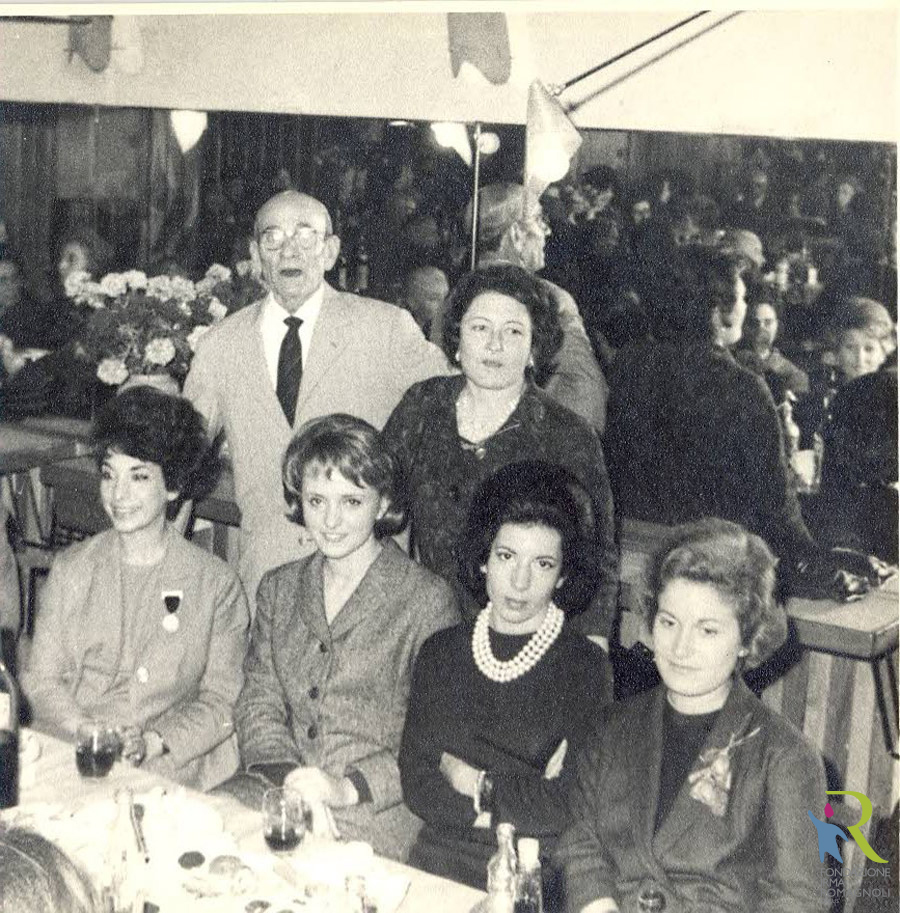
The Irma Romagnoli Foundation was born from an act of love.
The love that Irma Romagnoli felt for all defenseless beings. L’amore che l’ha spinta ad occuparsi con passione della cura di chi chiedeva il suo aiuto, grazie alla scoperta di un’energia innata che ha reso di lei una pranoterapeuta rispettata e raccomandata anche da medici specialisti.
La Fondazione Irma Romagnoli nasce per sua ultima volontà. Irma, che era solita dire “nulla chiedo e nulla rifiuto”, ha lasciato tutti i suoi beni in donazione alla Fondazione affinché continuasse ad occuparsi in suo nome degli esseri indifesi, in particolar modo dei bambini bisognosi e delle loro famiglie, ed al sostegno della ricerca sulle medicine tradizionali.
Irma was born into a poor family in Medicina, a small town in the lowlands of Emilia, in October 1910. On cold winter mornings, before Irma left for school, her grandmother would take the child’s shoes and hold them in her hands for a long time. This simple gesture ensured that her little feet stayed warm throughout the day. Irma watched this small miracle with wonder, only grasping its true meaning many years later.
A few years later, his father, a barber, decided to emigrate to Rosario in Argentina in an attempt to improve the family’s economic situation. Irma grew up with her grandmother, mother and sister, while her father, as frequently happened in those years, never returned to Italy.

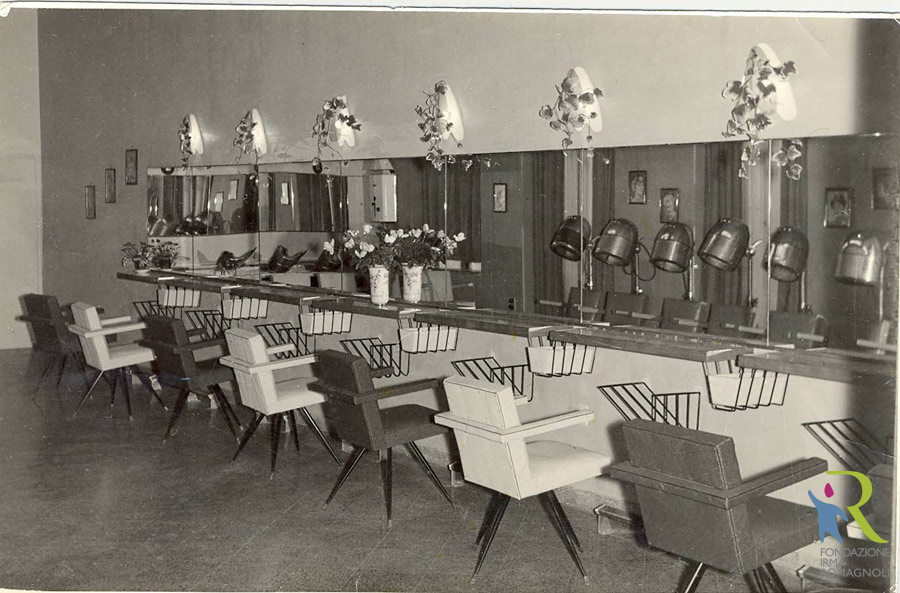
Irma trains to become a hairdresser, and by the age of twenty-five, she is already running a shop with two assistants in her town square. During those years, she happily marries Duilio, the only love of her life.
Then comes the war—with its air-raid sirens, frantic dashes to shelters, and fear.
In the late 1940s, she and her husband decide to go to Argentina to search for the father she has never forgotten—and, fortunately, she finds him.
She then resumed her work as a hairdresser by opening her own shop in the city of Rosario, which soon became the city’s most fashionable salon.
But it is no ordinary place; many women go there to have their hair styled by Irma because they find it relaxing or because she cures their headaches. Irma, however, pays no heed to these requests; she considers herself simply a good hairdresser.
Her friends, however, were beginning to realize there was something special about her; on one occasion, at a theater event featuring *curanderos* (traditional healers), they insisted she go up on stage.
The healers paused for a long time behind her, and Irma felt a shiver run down her spine.
At the end of the event, they took her aside and told her: “Señora, you have a power in your hands… use it to do good.” Yet, her pragmatic nature led her to ignore this sign as well.
A few years later, while she was accompanying her visiting sister to Iguazu Falls, an Indigenous woman approached her and spoke those same words—”Señora, you have a power in your hands”—but Irma still failed to grasp what the phrase might mean for her.
More peaceful years went by; then one day, while Irma was attending a soccer match with her father, he was struck violently on the head by the ball and died in her arms. The memory that stayed with her from that incident was the incredible serenity of that death, which she had embraced as she held her father close.
In the mid-1960s, her husband Duilio fell ill, and together they decided to return to Italy.
Using the proceeds from her business activities, she bought two apartments in the San Donato district of Bologna and rented one of them out to students. After Duilio passed away, Irma continued living in their apartment with a small dog named Dik and many canaries. Having no children of her own, she decided to rent out a room in her apartment to two female students. Day after day, for years on end—and despite repeated warnings from local authorities—she would go out to feed the pigeons on the lawn below. The pigeons recognized her and would wait for her every day.
In addition to her love for animals, Irma cared deeply about the plight of children, for as she used to say: “They are not to blame for anything…”
One day, she runs into an old friend, Elvira, whose hands are aching, gnarled, and deformed by osteoarthritis.
Irma tells her that someone in Argentina had once said her hands possessed a “power.”
Without knowing exactly how, they decide to try using it.
Every day, Elvira visits Irma; Irma places her hands over Elvira’s, and they chat. Day by day, the pain
diminishes until it vanishes, and the fingers regain their function. Word spreads, and more and more people ask for the laying on of her hands.
After a few years he decides to go to the prof. Inardi, a well-known pranotherapist, who asks her to do the liver mummification test. The test succeeds and he tells her that she is a pranotherapist with a lot of energy. Not satisfied and still in disbelief, she goes to Milan, to a center run by a group of engineers who, after subjecting her to various tests, issue her a certificate as a “very powerful” pranotherapist.
She organizes her work using an appointment book, and various doctors send her clients. She asks for no payment for her treatments but displays a sign reading: “I ask for nothing, and I refuse nothing.”
At the time, I was a medical student renting a room—along with other students—in her apartment on Via Zacconi. I met Irma the day I brought her the rent money, and I was deeply struck by her tenacity, intelligence, and humanity. She told me she had been working as a pranotherapist for several years but remained amazed that people came to see her—and, above all, that they found relief.
That was in 1974, and from then on, we were bound by a strong bond of esteem, respect, and friendship.
I would visit her several times a week; she would overwhelm me with the energy flowing from her hands and a torrent of words, recounting the pivotal moments of her life. She talked incessantly: “I can’t stay quiet,” she would say. “I don’t know where to put all this energy; I feel better when I talk…”
All the while, she would hold her hands over my head, and I—naturally a nervous person—would find myself relaxing.
From her life, I learned that there are many different ways to help people; I learned that not only medication but also energy can heal, and that helping those in need is a virtue to be cultivated.
We went on vacation together, took a cruise, went to the movies, attended family Christmas lunches, and took long walks toward the Bologna trade fair. We shared a deep bond that still warms my heart whenever I think about it.
Throughout the years, Irma used the “power” of her hands—along with her words and gestures rooted in ancient wisdom—to help men, women, children, and sometimes even cats, dogs, and canaries. She loved classical music, reading *Selezione* magazines, walking, and making donations to animal shelters and organizations that help disadvantaged children. She practiced *pranotherapy* until the age of 87, and right up to the very end, her hands would turn red and burning hot after a treatment session.
She passed away at the age of 96, leaving a holographic will stipulating that a significant portion of her assets be used to establish a foundation to help children in need, animals, and research into complementary disciplines.
It falls to us to continue the story.