Earthquake in Nepal
Dear friends,
As you know, for over twenty years I have been involved with an Ayurvedic preparations workshop in Nepal. I have just returned from that wonderful country, devastated by a violent earthquake.
Many of you have asked how to help these gentle, caring, spiritual people while ensuring donations reach those in need.
Through www.fondazioneirmaromagnoli.org, we have supported the education of sixteen students at a Kathmandu school for many years. Now I ask for your help.
After contacting Doctors Without Borders, already on the ground with field hospitals, and a local NGO with which we are establishing contact through our friend Kapil, I ask you to make a donation of any amount by bank transfer to Fondazione Irma Romagnoli Onlus at:
Unicredit IT 24O0200837100000103427704
Payment reference: TERREMOTO NEPAL.
The contribution is tax-deductible and will go ENTIRELY to the organizations mentioned above.
It would be wonderful if you could share this message.
Thank you, thank you,
Erus Sangiorgi
Reply from Doctors Without Borders
Dear Erus,
Thank you sincerely for your support for Médecins Sans Frontières.
As you can imagine, the situation in Nepal is very difficult. Our cargo plane carrying the inflatable hospital has landed in Kathmandu, together with all the supplies needed to make it operational. Meanwhile, our teams are starting surgical activities, have distributed 200 shelter kits and are flying by helicopter to mountain villages in Sindhupalchowk, which was severely hit by the earthquake.
In Ghorka, 200 km from Kathmandu, we have begun providing medical care to the population.
The more than 60 MSF workers in Nepal include Italians Angelo Rusconi, a logistician currently in the Ghorka area, and finance manager Andrés Weisz, based in Kathmandu. You can hear his account at this link:
http://youtu.be/Y-2IvXpwGwY
Below are the latest detailed updates from the bulletin of 1 May 2015:
- A cargo plane carrying 24 tonnes of supplies has arrived in Kathmandu.
- MSF teams continue working in mobile clinics in remote mountain villages north of Kathmandu.
- A surgical team comprising a surgeon, an anaesthetist and a nurse is supporting the hospital in Bhaktapur district, south of Ghorka, and has already performed 5 operations.
- We are identifying the best location for the hospital, where needs are greatest and our work can make the biggest difference.
Your help enables us to save many lives: men, women and children.
I will continue to keep you updated.
Best wishes,
Laura Masala
Corporate and Foundations Relations
Fundraising Department
Médecins Sans Frontières
Largo Settimio Severo 4, Milan
www.medicisenzafrontiere.it
One month since the first earthquake in Nepal
May 25, 2015
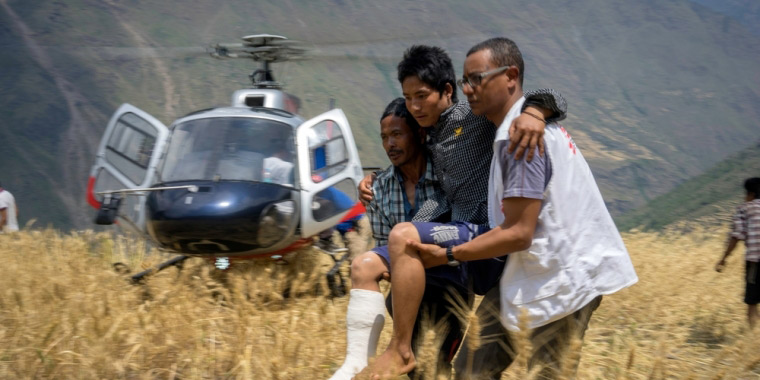
One month after the earthquake struck Nepal, and just weeks before the monsoon rains arrive, Médecins Sans Frontières (MSF) is racing against time to reach remote villages promptly with medical supplies and shelter materials. Logistical difficulties and challenging terrain have limited transport options, so our teams must use helicopters every day to deliver these materials to villages north and east of Kathmandu. When the rainy season begins, it will be harder to reach remote areas where roads have been damaged and people are consequently more vulnerable.
The two earthquakes
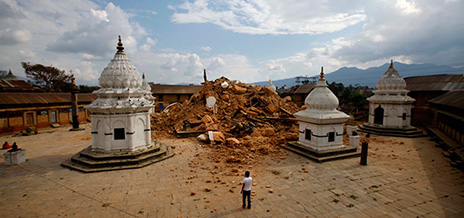
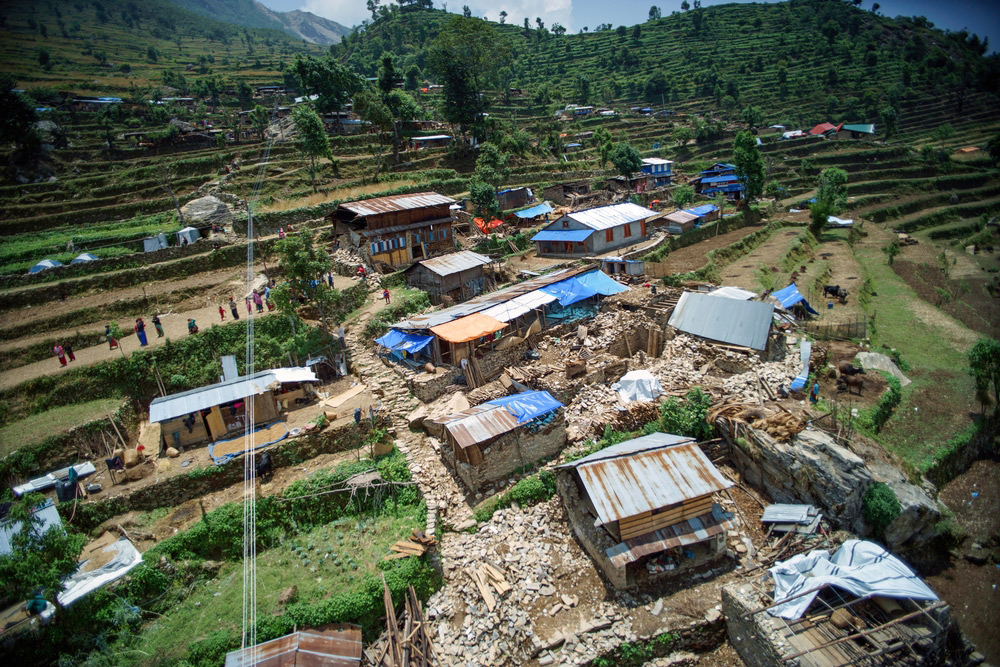
When the magnitude 7.8 earthquake struck Nepal, with its epicentre in Gorkha district, 80 km west of Kathmandu, MSF launched operations to help affected communities, running mobile clinics and providing shelters and hygiene kits. In some villages, MSF teams found homes and healthcare facilities completely destroyed, so MSF provided people with hygiene supplies and shelter materials. In Arughat, in Gorkha district, the main healthcare facility was destroyed, so MSF set up an inflatable hospital, which continues to provide healthcare services to surrounding communities.
On 12 May, when the second earthquake struck the area east of Kathmandu, MSF was able to respond immediately with teams already on the ground. Medical teams treated people on site and evacuated patients with serious injuries from remote villages.
MSF continues to address needs arising from both earthquakes across the affected areas, prioritising vulnerable populations living in remote villages that are harder to reach.
Building shelters: a priority
Providing tents, tarpaulins and construction materials is one of the main objectives of MSF’s emergency response. People must have somewhere to stay before the monsoon rains begin. MSF teams have increased helicopter flights to reach as many people as possible in affected areas and distribute shelter materials.
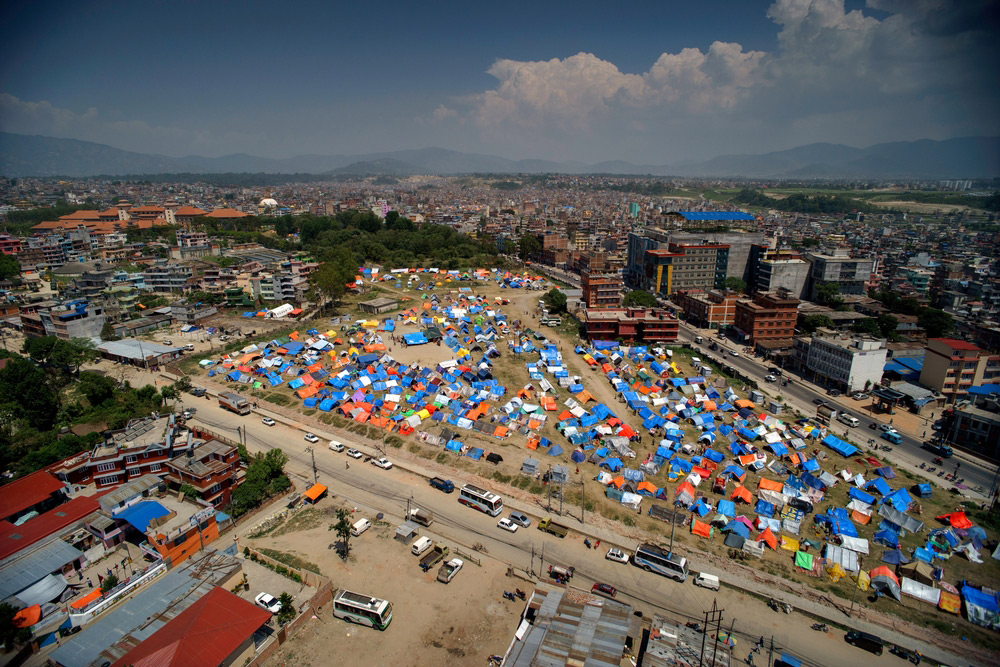
Where roads are accessible, MSF uses cars and trucks to distribute hygiene and shelter kits. To date, MSF has distributed shelter kits to more than 10,000 families in remote villages. These distributions are continuing, with priority given to the most isolated villages.
Every life counts!
Before each intervention, MSF assesses affected areas to establish their needs. Assessment teams include a medical team that examines patients on the ground, treats them and evacuates those with serious injuries. Since the earthquakes, MSF teams have treated people with both earthquake-related and unrelated injuries. So far, we have carried out more than 3,000 medical consultations and evacuated people who were close to death.
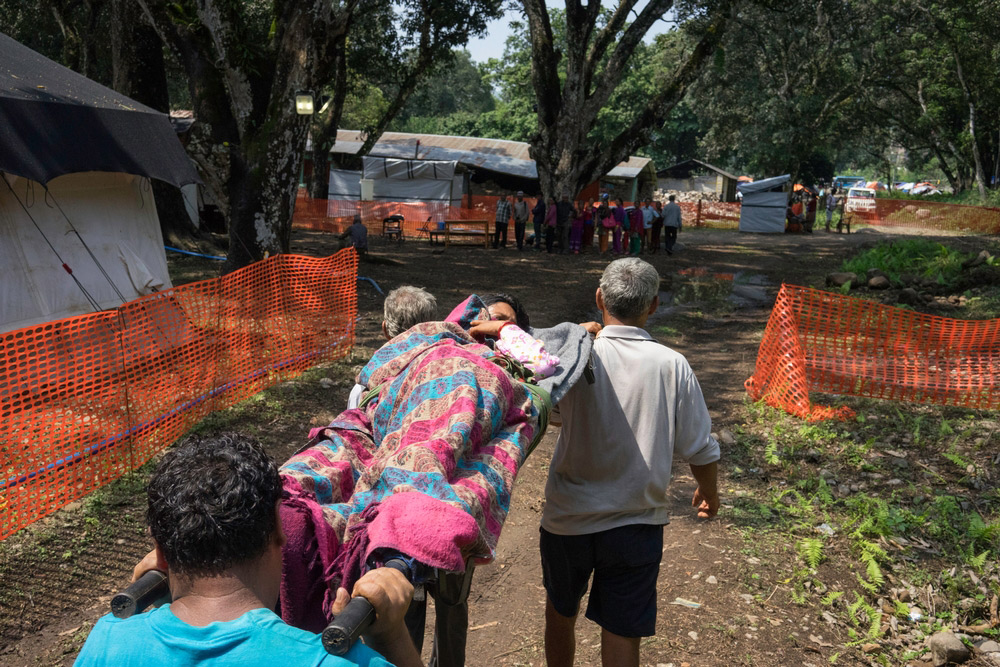
A total of 1,150 healthcare facilities have been completely or partially damaged in the 14 hardest-hit districts. Current healthcare needs include managing traumatic injuries, restoring basic healthcare services and providing rehabilitation for patients discharged from hospitals.
Nepal Update
June 23, 2015
How we turn your support into concrete action
For emergencies of this kind, we channel donations into our Emergency Fund, which allows us to respond quickly and effectively.
The Fund is designed to help us manage our medical and humanitarian work, especially in crises caused by natural disasters and conflicts, where the situation changes daily and activities must be planned in the short term.
Mobile clinic kits: €50,000
A backpack equipped for first aid in hard-to-reach areas:
it contains 330 items, including medicines, medical instruments, bandages, plasters and torches, providing supplies for 20 days.
Drinking water for 1,200 people for one week: €30,000
Safe drinking water is essential in areas where men, women and children live in precarious conditions without medical care, to prevent the spread of diseases that can become fatal in these settings. Water is also vital to the functioning of medical facilities. This is why providing drinking water is inseparable from the medical care delivered by humanitarian workers.
Amid the catastrophe, our doctors in Bhaktapur delivered the first baby born after the earthquake!
Sadly, on 2 June, three colleagues, Sandeep Mahat, Jessica Wilford and Sher Bahadur Karki (Raj), lost their lives in a plane crash in Nepal while returning to Kathmandu after delivering medical aid and humanitarian assistance to villages in Sindhupalchowk district.
Open the Médecins Sans Frontières Nepal news bulletin
VIDEOS
Our team’s departure https://www.youtube.com/watch?v=DIVCW2IhIAk
Our 20-bed inflatable hospital in Arughat https://www.youtube.com/watch?v=hD7nQ2Z3Sn0
Reply from the Medical Association
http://www.omceo-ra.it/terremoto-nepal-il-messaggio-di-aiuto-di-un-iscritto
“Dr Erus Sangiorgi, a member of the Commission on Non-Conventional Medicine, has sent us an appeal for help for the people of Nepal devastated by the earthquake. The Medical Association endorses this appeal in the hope that everyone will offer concrete support.”
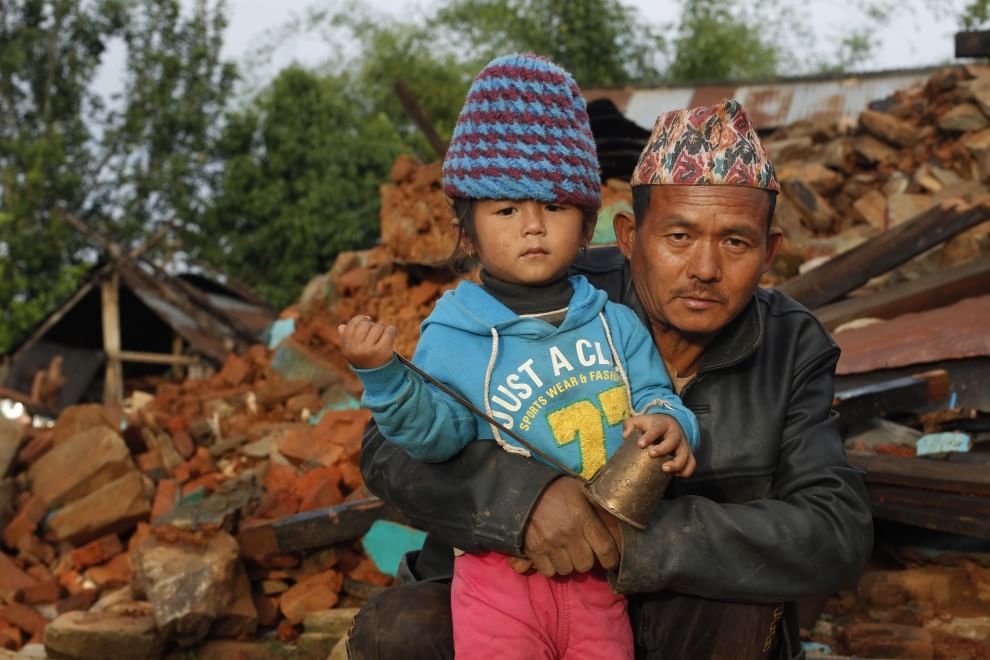
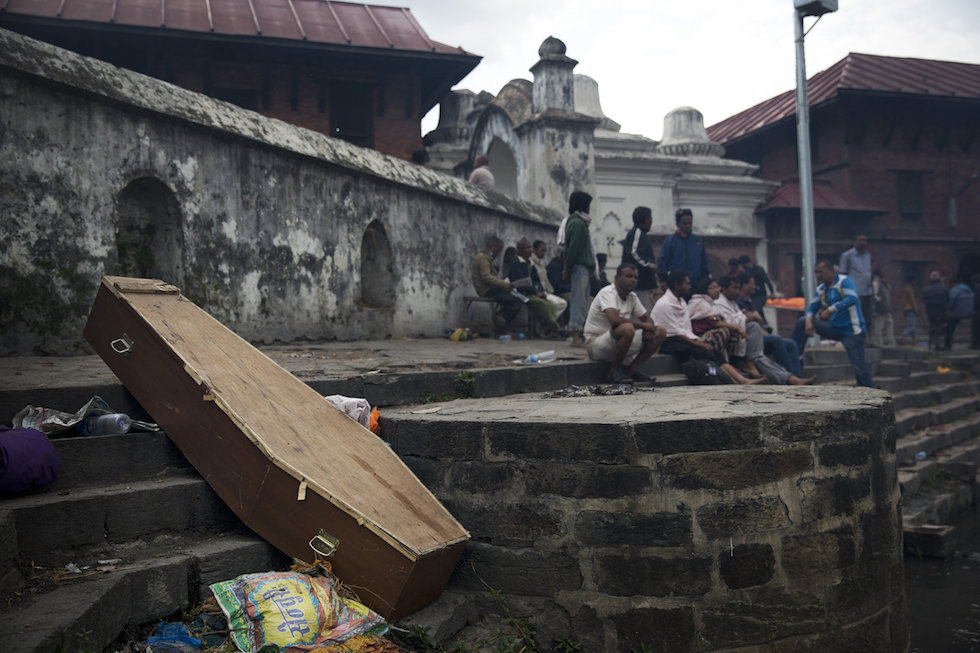
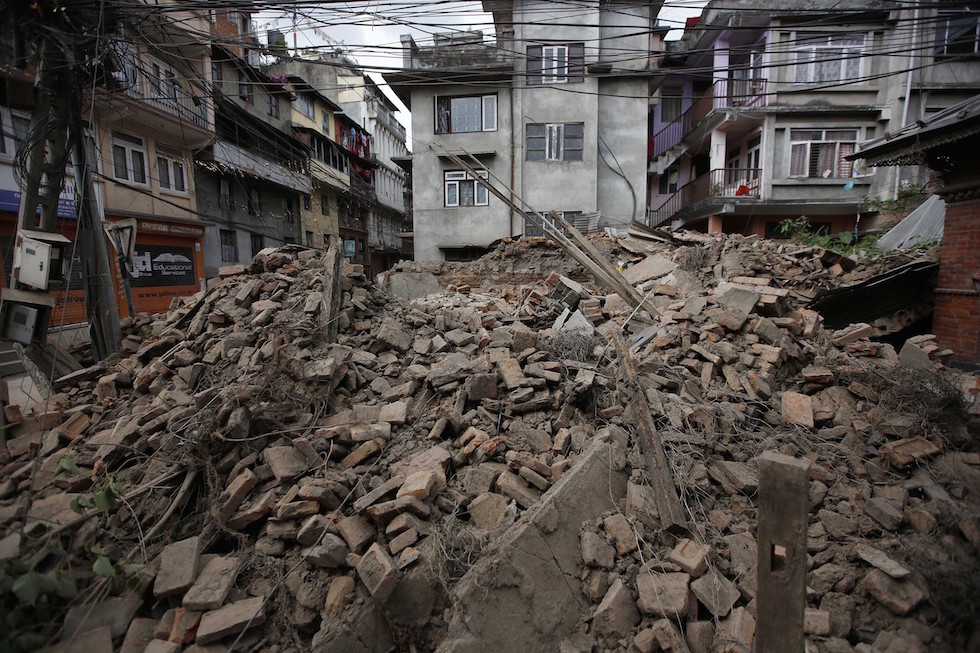
Photos of the devastating magnitude 7.8 earthquake