HANFIYA: A FLOWER IN THE DESERT
Self-sufficiency for a free education
To view and print the project click here.
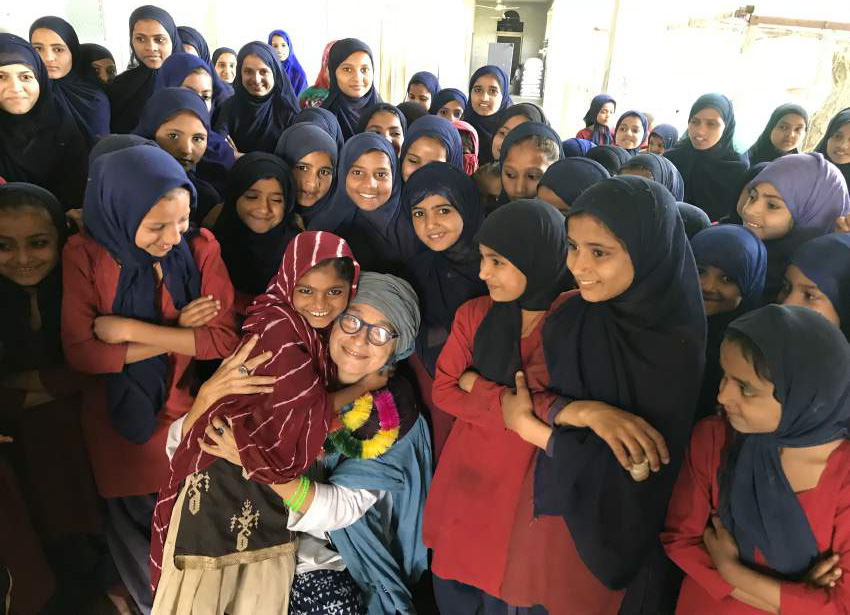
Hanfiya School is a groundbreaking project in the fight against female illiteracy in India, particularly among the poorest Muslim communities, where one in two girls still has no access to schooling. Hanfiya’s successful approach has been to offer students not only free education but also food, accommodation, medical care, clothing, books, pens, notebooks, and other necessities for up to eight consecutive years. For many poor Indian families, having one fewer mouth to feed for such a long period can make a real difference. Two or three sisters are often enrolled together; in one case, six sisters arrived at the school at the same time. This can be a vital choice for families surviving at subsistence level. The approach has proved effective: in eight years, the school has grown from five to 130 pupils.
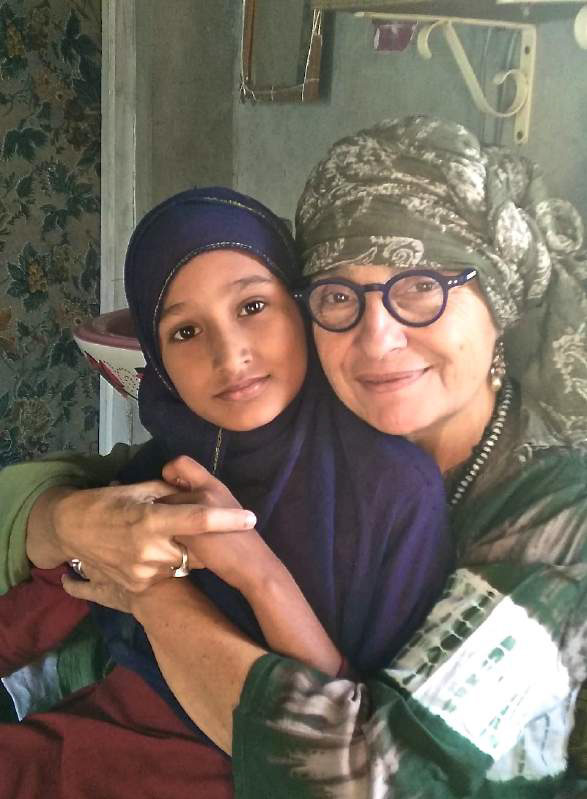
The project is the result of the vision, efforts, and passion of a young couple, Zainab Banu and Haji Khan, who have dedicated their lives to girls’ education. What Zainab and Haji have achieved so far is almost miraculous, given that throughout these years they have relied solely on voluntary private donations. Things began to change when the school was visited by an Italian writer and longtime scholar of India. Marta Franceschini arrived at Hanfiya “by chance” in 2018 and was so impressed by the challenge undertaken by these two courageous young people that she decided to try to help.
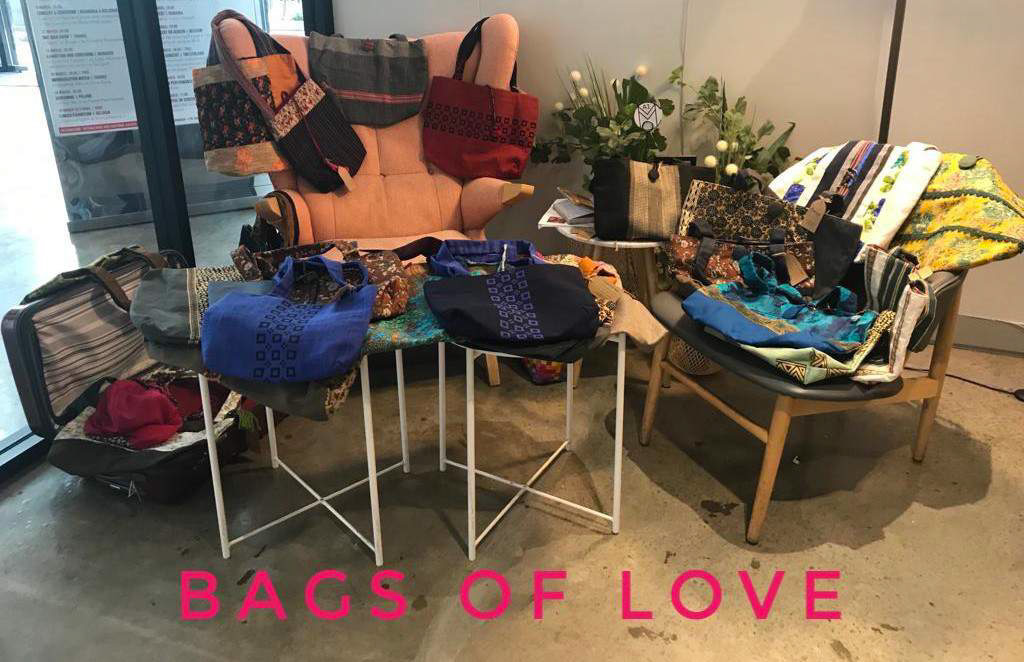
This led to the A FLOWER IN THE DESERT project. The idea was to open a craft workshop within the school, employ women from the semi-tribal community living in the surrounding desert, and begin producing goods for the international fair-trade market. Within a few years, the enterprise could make the school self-sufficient and ensure that the education of its 130 girls was not merely a miracle but a certainty. At the same time, we aimed to empower marginalized women in the desert, whose clothing displays their remarkable embroidery skills, by offering wages, training, and opportunities to achieve goals and take on responsibilities that strengthen their dignity. In other words, an invitation to independence grounded in ethical values, gender equality, and environmental protection.
Thanks to an initial micro-donation campaign, the workshop was officially inaugurated on October 14, 2018, when Marta Franceschini and the first seamstress cut the fabric for the first bag while sitting on the school veranda floor. The workshop subsequently welcomed two paid workers and three trainees selected from the school’s older students. Production sought a balance between the desert’s colorful, exuberant fashion and the more restrained tastes of Western markets. Another important goal was to develop the team’s attention to detail and finishing, aspects that were not central to their tradition and outlook but were essential for overseas markets. Ultimately, it was also necessary to find buyers and customers interested in both our products and our mission.
During the first six months, a 50-square-meter workshop with four windows and two doors was set up. It was furnished with a large worktable, two new and three secondhand sewing machines, seven chests for fabric, and a supply of textiles and accessories. Two rooms with bathrooms were also built on the same floor for the project coordinator and visiting design professionals. Seven fans were installed throughout the workspace, a kitchenette was arranged for tea during breaks, a small solar power system was installed to cope with frequent power cuts, and a car was purchased to collect materials.
Meanwhile, we established contacts with four shops in Italy and sold more than 300 bags to supporters and friends. A New Delhi marketing agency, www.joiiehotels.com, selected our project for free marketing assistance as part of its social responsibility campaign: it designed our logo and built a professional website for us. We were also contacted by an Italian nonprofit organization, www.mancikalalu.com, which is considering supporting the project and sent two members to visit our facilities. We even attracted the interest of the Anthropology Department at the University of Bergamo, which would like to conduct research here on “marginalization and self-sufficiency.”
We can therefore conclude that, in its first six months, A FLOWER IN THE DESERT has demonstrated considerable potential for future development. The next step is to move from an exciting, creative, but somewhat improvised beginning to a more stable and sustainable commercial operation, able to reach a wider market and meet its deadlines and quality standards. In other words, we want to give strength, dignity, and independence to this bold flower that has grown in the desert, so that it can become a reliable resource and secure the right to free and open education for many Indian girls.
Marta Irene Franceschini is a journalist and writer who has studied India for more than 30 years. An award winner and finalist in numerous competitions, she has published five novels and an essay, written scripts for many documentaries and theater productions, and won awards for her experimental videos.
In 2012, she earned an MPhil in Medieval History from Jawaharlal Nehru University in New Delhi.
She conceived A FLOWER IN THE DESERT and made it possible entirely through her unpaid volunteer work. She is now devoting all her time, energy, and creativity to the project.