IN THE SADDLE
PASSO PASSO LOCAL ASSOCIATION FOR INCLUSION

“In the Saddle 2016” Project
The “In the Saddle 2016” project is a partnership between the Child and Adolescent Neuropsychiatry unit of the Bologna Local Health Authority’s Department of Mental Health, Casalecchio-Porretta-San Lazzaro District; the Passo Passo Association of the Reno and Setta Valleys; Fondazione Irma Romagnoli; and the Hippo Vie Association of Bologna. The on-site team consists of:
- Dr. Giovanna Mazzotta, Child Neuropsychiatrist for the Casalecchio di Reno District and Technical Coordinator for Equine-Assisted Rehabilitation
- Chiara Zagnoni, Professional Educator with Cooperativa Libertas
- Federica Mazzoni, Professional Educator with Cooperativa Libertas
- Giulia Caselli, Riding Instructor, Equine-Assisted Rehabilitation Practitioner, and Intern with the Hippo Vie Association
- Thomas Pescuma, volunteer
- Veronica Monni, volunteer and Educational Sciences student
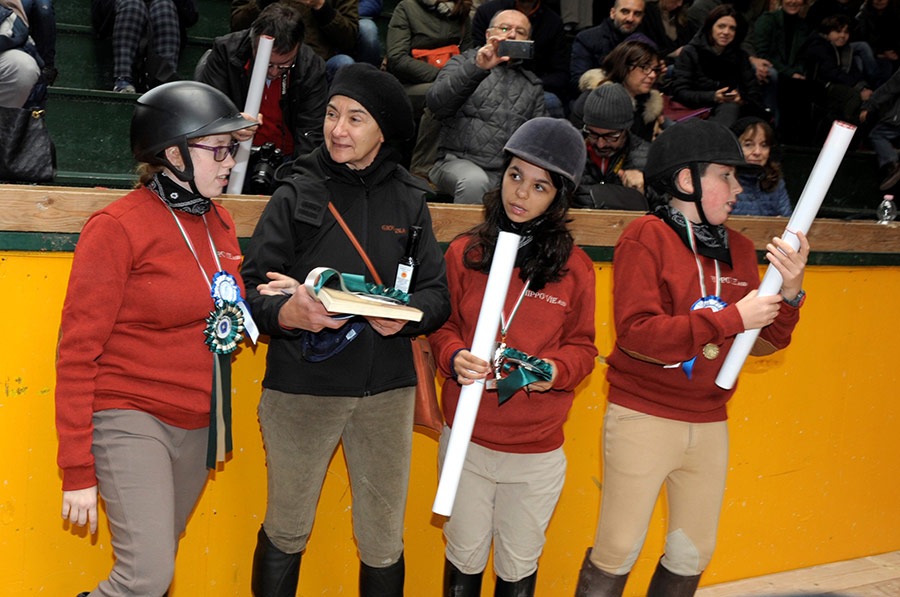
Now in its fourth year, the project involves 11 children receiving care from the Child Neuropsychiatry Service of the Casalecchio-Porretta District. Their clinicians have identified equine-assisted rehabilitation as a useful addition to the outpatient, school-based, or extracurricular educational and healthcare interventions they already receive.
The children experience cognitive, relational, behavioral, and neuropsychological difficulties. Some have difficulties across two or more areas of development, while others have difficulties in just one area. Except for one child with a severe condition resulting from a genetic syndrome, the other ten children have mild-to-moderate difficulties.
The group consists of seven boys and four girls aged 6–13.
The children will be divided into three groups, primarily according to their clinical diagnoses: two groups of four and one group of three, which includes the girl with the most severe condition. Group work has been chosen to encourage peer interaction and shared games and activities, adapted to participants’ ages and needs. The underlying aim is to combine attention to individual needs with inclusion and interaction within the group.
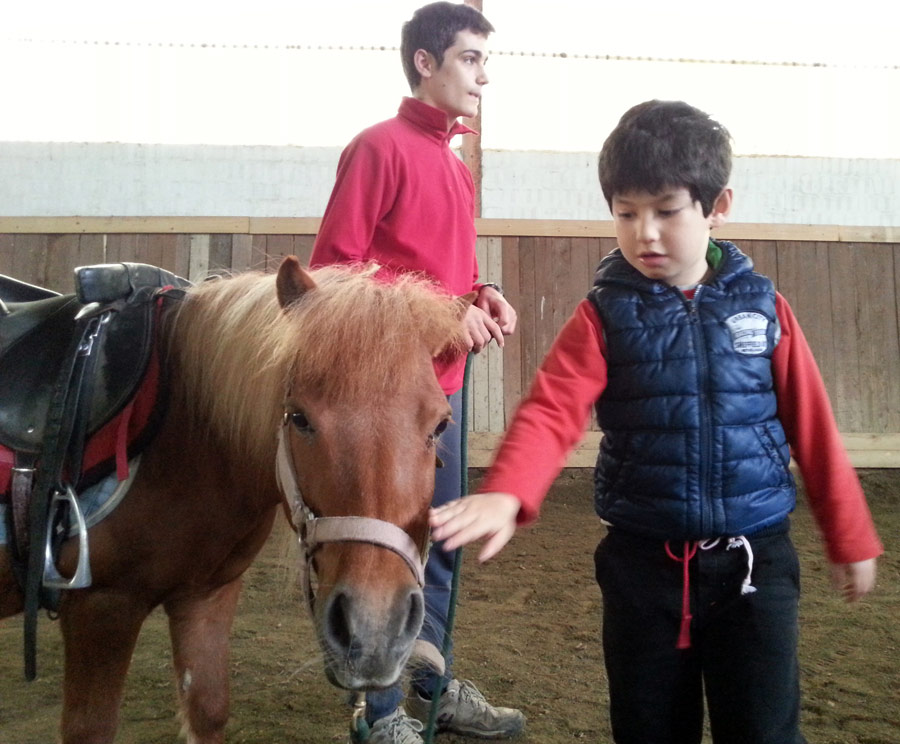
Activities take place at the Società Ippica Bolognese equestrian center in Rastignano, Bologna, which provides riding-school ponies whose temperament and physical characteristics have proved particularly suitable for working with children with disabilities.
During the first half of the year, ten weekly sessions lasting fifty minutes will be held. Saturday mornings were chosen to facilitate parents’ participation: parents bring their children to the riding center and, free from work commitments, can watch the activities in the arena. Children have often been accompanied by both parents and their siblings.
The children will work both in the saddle and on the ground, taking part in activities designed to develop or improve communication, relationships, neuropsychological skills, motor coordination, and purposeful movement. Where possible, all will practice walking and trotting, with the aim of independently controlling the horse at a walk.
The second cycle of 12 sessions will begin on September 17 and end on December 3, bringing the total to 22 sessions.
Video recordings will be made regularly to document the activities and allow a more accurate assessment of how effectively the intervention draws on the children’s strengths and develops their skills.
Dr. Giovanna Mazzotta
Child Neuropsychiatrist
Summer camp